The butterflies are stalking me
They do this thing, veering into my path when I’m biking or even running. Or, God help me, driving at 50 mph up Curtis Road between fields of soy bean plants that seem to foster their fluttering. Maybe it’s the way drafts of air work on such tiny bodies. They can’t help but be attracted to us.
We can’t help being attracted to them.
Sure, their wings are pretty: colorful, symmetrical. They move in lovely little flutters. But they also digest themselves to be born and, as adults, eat only liquids, often the deadest of dead fruit, through their own attached-to-the-face straw. What are we really looking at?
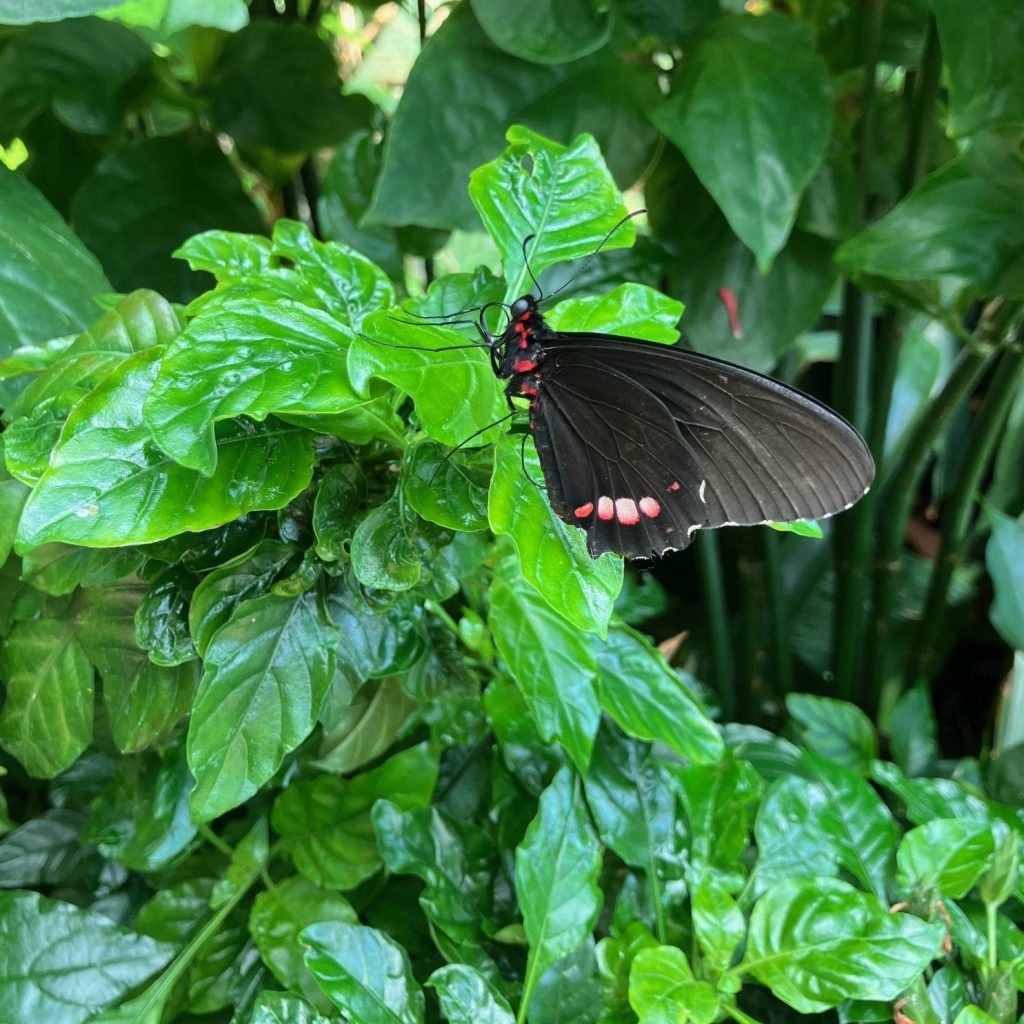
I couldn’t get away from butterflies this month. They were suddenly everywhere, so I started to pay attention.
Labor Day weekend, we visited the Peggy Notebaert Nature Museum in Chicago. A solid museum to visit with a child, it offered a beaver dam you can crawl through, a wooden chair you can construct yourself, a few interactive water exhibits. But the place came alive in the digital butterfly room. You draw your own pattern on a butterfly, scan it, and then watch a giant version of it fly around a meadow with all the other hand-drawn butterflies. (Paul, 4, crayoned a bright red and blue butterfly. It was gorgeous. And my husband drew a cartoon truck on each wing of his, the funniest thing I saw all day.)
Things got even better in the museum’s Judy Istock Butterfly Haven, a solarium filled with tropical plants, running water and bright butterflies flying everywhere. It was hard not to walk into them. It was mesmerizing, sitting still and watching these glorious patches of color flutter-flop from branch to leaf to feeding dish of rotten banana.
I could have stayed for the rest of the afternoon, but eventually, we wandered outside and walked to the Lake Michigan shore. Suddenly I was mindful of “real” butterflies, or so they seemed in contrast to the tropical species contained in the butterfly haven; the good old monarchs and little yellow dudes flitting between cars along Lake Shore Drive.
On my birthday a few days later, I received multiple cards with butterflies on them. I got out for a walk on my lunch break that day and the meadow was full of bright yellow butterflies, feasting on prairie flower nectar.
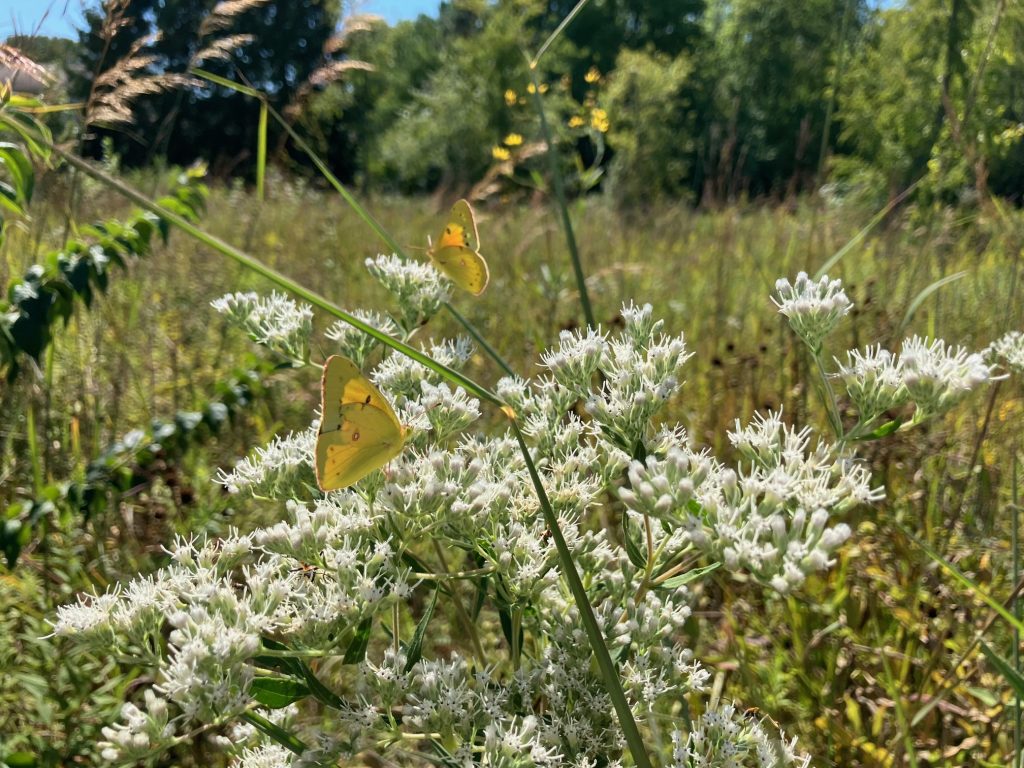
September is high butterfly season in middle Tennessee – not far from here – Margaret Renkl wrote this month in the New York Times. The local butterflies are busy mating for the last time of the season. The migrating butterflies have an even more urgent job: eat a lot and fly south before the cold catches them. This is their instinct, but there’s another force at work this year.
The last week of September here, its reached 90 degrees F nearly every day. I admire the butterflies’ instinct to fly south, but I worry for them, running into even higher temperatures farther south as summer eerily goes on and on and on. In fact, something sinister is going on with the butterflies: the journal Science reported this year, Renkl wrote in her column, steep declines in U.S. butterfly populations – 22 percent across 554 species.
“It’s up to us to care,” Renkl said. “And the first step toward caring, as is so often the case in conservation, is getting to know our wild neighbors.”
Butterflies: I am officially paying attention. Looking past my pop culture level butterfly knowledge (Finally! I’m a beautiful butterfly!) to really look at you and for you and look out for you. Now that I’ve started seeing you, I can’t stop.
